
Gaming Stories for beginners – ideas and examples you can post today
Introduction
If you have never posted a gaming story before, the first one can feel strangely high-stakes. You might worry that your setup looks plain, your skills look ordinary, or nobody will care about a session that ended in a loss. That worry is normal, and it is also misleading. A good beginner gaming story is not a highlight reel. It is a small, honest snapshot of your own play: the game you opened, the moment that made you laugh, or the lesson you learned the hard way.
Every idea below uses only your own gameplay, setup, and words. You need no capture card, fancy desk, or winning streak, and you need not show your face. One real moment, photographed or clipped by you, is enough to start.
1. Show your setup exactly as it is before you play

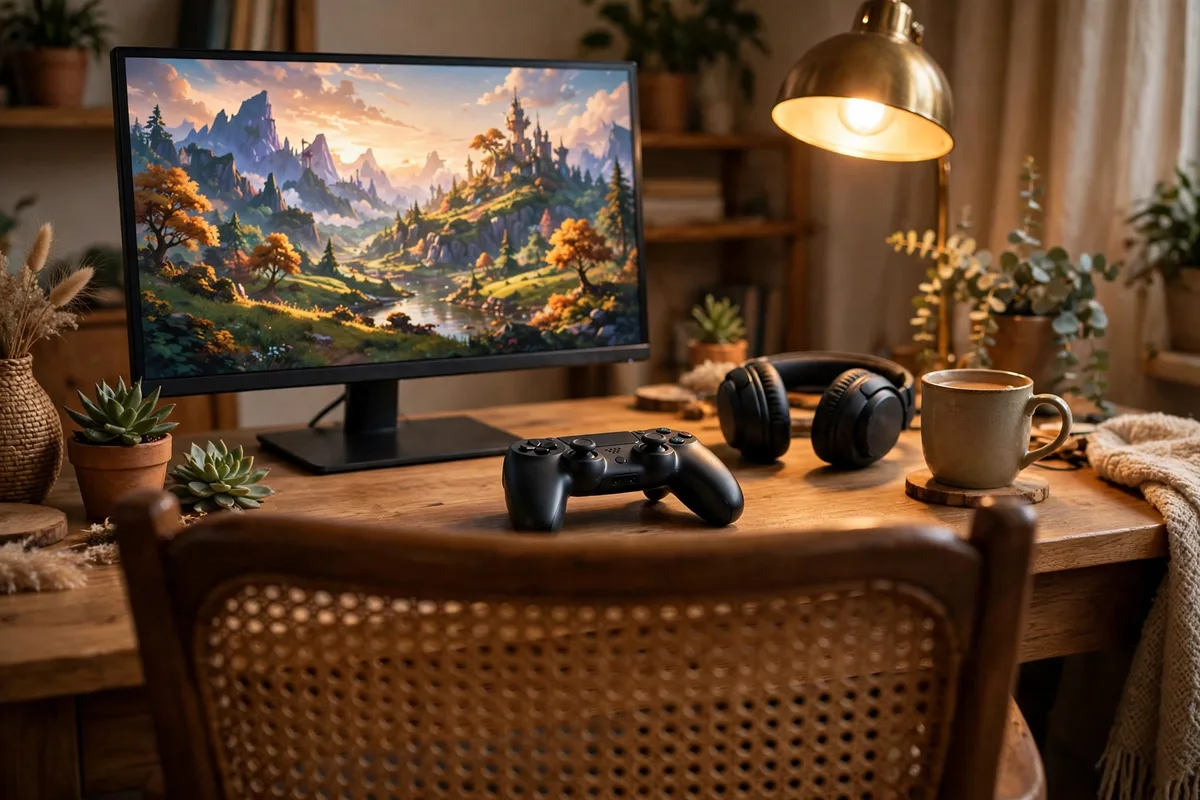
The easiest first gaming story is a photo of your setup before a session starts. Maybe it is a phone propped on a cushion, a laptop on a kitchen table, a controller with a worn thumbstick, or a headset hanging on a chair. Photograph it honestly and add a plain caption such as, "Old controller, fresh start. Trying the first level again tonight." Viewers recognise real setups far more than staged ones, and announcing that you are about to play makes sitting down feel like an event rather than a chore. Keep the frame tidy enough to read, but do not hide the everyday details that make it yours.
2. Post the one level or match you are playing today
Instead of summarising a whole evening, pick the single level, match, or quest you are playing today. It might be a puzzle level you have failed three times, a short race you keep replaying, or the opening area of a game you only just installed. Caption it simply: "Today is just this level. Slow progress, but I finally learned the timing." A single focus keeps your story believable and easy to follow. Over time, these posts become a record of games you tried, finished, or happily abandoned.
3. Share the first thing you learned in this session

A beginner story becomes memorable when it names one concrete thing you learned. Perhaps you discovered that rushing into a room gets you caught, that saving before a tricky jump matters, or that a quieter approach works better than charging ahead. Write it in your own words, for example: "I kept losing until I stopped sprinting everywhere and started watching the corners. Suddenly I survived twice as long." Teaching a tiny lesson back proves you noticed something real, and it invites friendly replies, because other players love adding their own beginner tips and corrections.
4. Capture your funniest fail, not just your wins
Gaming stories that only show victories can feel stiff, and beginners often run out of wins to post. A funny fail solves that. Record your own short clip of a mistimed jump, a wrong turn into a dead end, or a character tripping over the simplest obstacle, and caption it honestly: "Me, confidently walking straight off the edge I had just seen." Fail stories are relatable because every player has done exactly that, and they show confidence: you are comfortable enough to laugh at yourself. Keep the clip short, keep it your own gameplay, and never use anyone else's footage.
5. Show your before-and-after score or progress

A short progress post makes a wonderful beginner story because it turns a vague session into visible change. Photograph your starting screen, then your result after one match or level, and caption it: "Started at the bottom of the board, finished two places higher. Small win, big mood." Small improvements beat dramatic ones, because finishing a little better builds confidence while an impossible target only builds frustration. Viewers often reply with their own scores and encouragement, and that shared accountability is one of the kindest parts of gaming stories.
6. End the session with an honest closing frame
A closing story gives your gaming session a clear ending and something to look back on. Photograph your controller set down, your game paused on a save screen, or your notes about what to try next time. Add a note such as, "Paused here for tonight. Tomorrow I will try the slower route and see if it helps." Honest closings include feelings, not just results. Some sessions end in victory, some end in a string of losses, and saying so plainly makes your stories trustworthy and easy to return to tomorrow.
Posting checklist
- Pick one scene, one photo or short clip you captured yourself, and one short caption.
- Share only your own gameplay, setup, and words, never anyone else's footage or content.
- Name one concrete thing you played, learned, or improved in this session.
- Keep text large, clear, and easy to read on a small screen.
- Be honest about wins and losses, including sessions that did not go well.
Frequently asked questions
What should my very first gaming story be?
Start with your setup before you play, or the single level you plan to tackle. Both are easy to photograph, need no special equipment, and give viewers a clear, honest opening.
Do I need an expensive setup to post gaming stories?
No. A phone, a borrowed laptop, or a basic controller all work well. Viewers respond to real setups and honest captions far more than staged perfection.
How many gaming stories should a beginner post in one session?
Three or four frames is plenty: a starting setup, one moment of play, a funny fail or lesson, and a closing note. Short sequences are easier to make and easier for viewers to enjoy.
What if I feel shy about sharing my gaming?
Share your setup, your screen, and your progress rather than yourself, and keep captions simple. Your play is the story, and it never needs a perfect clip to be worth posting.
Closing
Gaming stories for beginners work best when small, honest, and close to what you actually played. Show your setup as it is, focus on one level, name one thing you learned, laugh at a fail, track a small improvement, and close the session honestly. Your next session already holds your first story.
Related posts
- Gaming Stories for small accounts – ideas and examples you can post today
- Gaming Stories that actually get replies – ideas and examples you can post today