Story Privacy And Safety for musicians – ideas and examples you can post today
Introduction
Musicians live much of their working life in public, which makes privacy feel like something other people worry about. But a gig story can reveal where you will be tonight, a rehearsal clip can leak an unreleased song, and a studio photo can show expensive gear in an unlocked room. The habits below protect your venues, your unreleased work, your gear, and the people you play with, while keeping your stories warm and worth following.
1. Post gig locations after the show, not before

Announcing your venue in a live story tells everyone, including people you would rather not meet, exactly where you are and when you finish. Post the venue after the show, or the next morning, when the moment is already over. One singer posts a soundcheck photo only after she is home, captioned with the night's best moment, and her followers still feel they were there. For small venues and house concerts, be stricter: never post the address, and keep the audience to people the host actually invited.
2. Keep unreleased music out of rehearsal stories
A thirty-second rehearsal clip can travel far beyond your followers, and once an unreleased melody or lyric is out, you cannot pull it back. One band lost the surprise of a new single when a rehearsal story was screen-recorded and passed around before release day. Now they film rehearsals with no audio, or they post only the room, the setlist cover, and the band laughing between takes. If you must share a snippet, share a finished teaser you chose deliberately, not a rough take caught on a phone. The same caution applies to lyrics on whiteboards, notebooks, and screens visible in the background of a studio story.
3. Hide gear, serial numbers, and studio locations
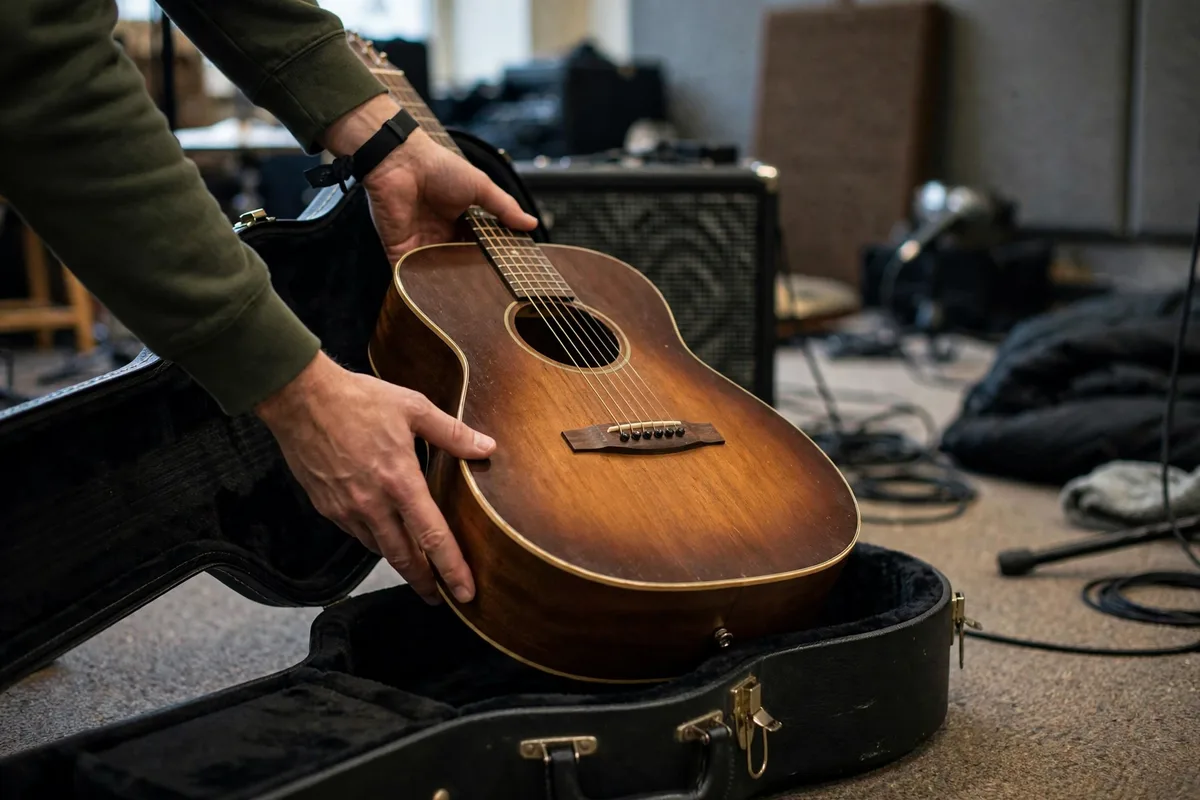
Studio and stage stories are catalogues for thieves when they show instruments, serial numbers, and the building you store them in. One guitarist stopped photographing his full collection against the studio wall and instead posts close-ups of his hands on one instrument at a time. Check for serial numbers on headstocks, cases with name tags, and street signs or building names through studio windows. Avoid posting your studio's location entirely, and do not share your load-in routine: a story showing you carrying gear alone into a venue at the same time each week is a timetable.
4. Protect bandmates, students, and young fans
Not everyone in your musical life wants to be content. A bandmate may be happy to play the gig but not to appear tired, emotional, or mid-argument in a backstage story. Students, especially young ones, should never appear in your stories without clear permission from them and, for minors, their parents. One teacher posts only her own hands on the piano, never her students, and describes lessons in words rather than faces. Young fans at gigs deserve the same care: a crowd shot is one thing, but a close-up of an identifiable child is not yours to post. Ask, and accept a no gracefully.
5. Manage messages and boundaries after shows
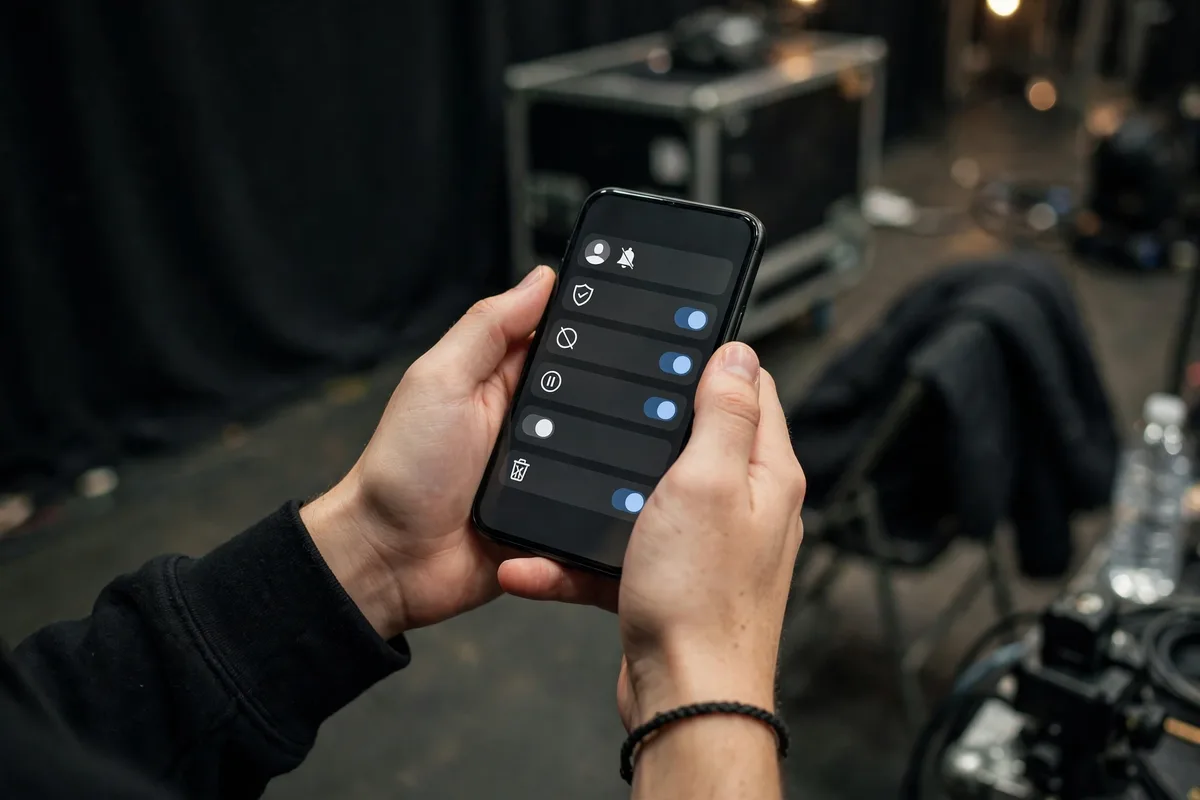
Gig stories bring a wave of messages, and some of them cross lines: requests for your home address, late-night calls for attention, or strangers who tracked the venue from your story. Use message controls: limit story replies, filter message requests, and never answer location or personal questions from unfamiliar accounts. One musician keeps a simple rule for show nights: she reads messages the next morning, never at the venue, and she never tells a stranger where she is staying. If an account becomes persistent or threatening, block and report it, and tell the venue staff if you feel unsafe.
6. Separate your artist account from your private life
The cleanest privacy habit for a musician is separation. Keep your artist account for music, gigs, and public life, and keep family, home, and close friends on a private account or a Close Friends list. One songwriter found that fans treated her artist account as an invitation into everything, until she moved family stories off it entirely; the music account grew, and her private life quietened. Check who follows each account, and do not cross-post family moments to the public one in a burst of excitement after a good show. Two accounts take slightly more effort, and they give you a stage door you can actually close.
Posting checklist
- Post gig venues after the show, never live, and never share house-concert addresses.
- Film rehearsals without audio, and keep lyrics and notebooks out of frame.
- Photograph one instrument at a time, with serial numbers and studio signs hidden.
- Never post students or young fans without clear permission from them and parents.
- Limit story replies on show nights, and read messages the next morning.
- Keep family and home content off your public artist account.
Frequently asked questions
Can I promote a gig on stories without risking safety?
Yes. Use a flyer or announcement ahead of time, and save venue stories for after the show. Avoid live updates from the door, and never post the address of a small venue or house concert.
Is a rehearsal clip safe if my account is small?
No. Screen recordings travel beyond your follower list in minutes, and an unreleased song cannot be unpublished. Share finished teasers you chose deliberately, not rough rehearsal audio.
Should I reply to fans who message after a show?
Reply when you are rested and somewhere safe, not at the venue late at night. Never share where you are staying, and use message filters to keep requests from strangers out of your main inbox.
Do I need a separate private account as a musician?
It is the simplest way to protect your home life. A public artist account for music and a private account for family gives fans closeness without giving them access to everything.
Closing
A musician's stories should sound like an invitation to the music, not a map to your life. Delay the venue, mute the rehearsal, hide the serial number, and ask the people around you before they become content. Fans will still feel close to you through the songs, the stage photos, and the honest moments you choose to share. The rest, your home, your unreleased work, your students, and your quiet life, stays yours.
Related posts
- Story Privacy And Safety for photographers – ideas and examples you can post today
- Story Privacy And Safety for gamers – ideas and examples you can post today