
Creator Stories for creators – ideas and examples you can post today
Introduction
Creators learn most from other creators, and stories made for creators speak to that shared experience. These are the behind-the-scenes posts about process, tools, routines, mistakes, and small wins that only fellow makers fully appreciate.
This post is about creator stories for creators, for stories you create yourself, on your own public profile, about your own creative practice. The audience here is not a customer. It is a peer. That changes the tone: less polish, more process, and a willingness to show the unglamorous parts that tutorials usually skip.
1. Share your actual workflow, not an idealised one

Fellow creators can spot a staged workflow instantly. Show the real one: the messy desk, the half-finished drafts, the order you actually work in, and the shortcuts you rely on. A real workflow gives peers something they can adapt, while a perfect workflow only makes them feel behind.
Example: a video creator might show her editing timeline with its rough cuts, retakes, and notes to herself. A writer might show a chapter outline covered in crossings-out and arrows. A photographer might show a contact sheet with most frames rejected and two circled as keepers.
2. Talk openly about tools, costs, and trade-offs
Creators constantly weigh tools: free against paid, simple against powerful, fast against careful. Share what you use, what it costs in money or time, and what you gave up by choosing it. Tool talk without trade-offs reads like advertising. Tool talk with trade-offs reads like advice from a colleague.
Example: a podcaster might compare a phone microphone with a dedicated microphone, noting the sound difference and the extra editing each needs. An illustrator might explain why she draws on paper before scanning, despite the extra step, because the line quality matters to her. A musician might describe choosing a simpler recording setup to keep sessions spontaneous. Peers value the reasoning behind a choice more than the choice itself.
3. Show a mistake and the fix, step by step
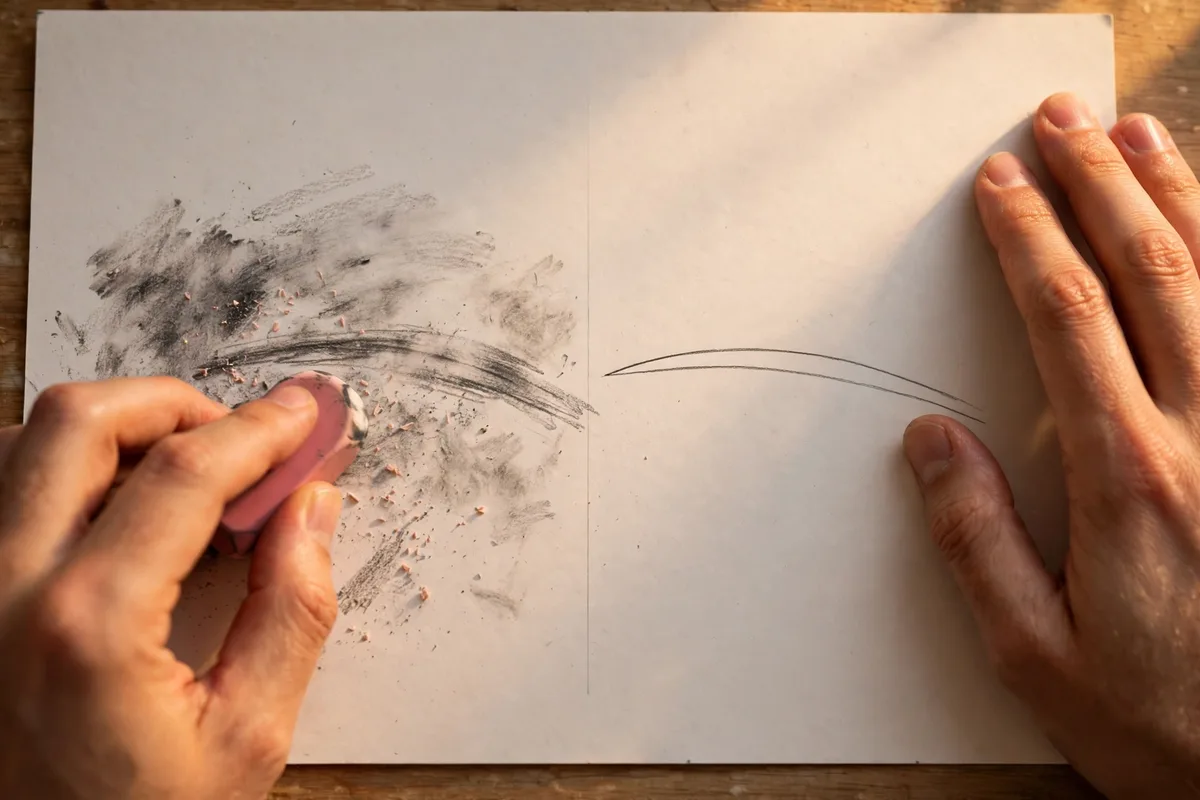
Mistake stories are the most generous posts a creator can make for peers, because they save others from repeating the error. Pick one real mistake, show what went wrong, and walk through the fix in clear steps. Keep the tone matter-of-fact: mistakes are part of the craft, not confessions.
Example: a baker filming a tutorial might show a collapsed cake, explain that the oven door was opened too early, and show the retake with a steady temperature. A designer might show a poster with unreadable text, explain the contrast problem, and show the revised layout. A gardener filming a series might show seedlings lost to overwatering, then show the revised watering routine.
4. Share routines that protect your creative energy
Burnout is a shared creator problem, and routines that prevent it are genuinely useful peer content. Share how you plan a week, when you stop working, how you handle slow periods, and what you do when ideas run dry. Keep it practical and personal: a routine that works for you, offered as an example, not a rule for everyone.
Example: a painter might share a morning routine of sketching before messages, protecting an hour of quiet work. A teacher-creator might share a batching day, filming several short lessons in one session to free the rest of the week. A writer might share a rest rule: no drafting after a certain hour, so mornings stay fresh. Peers appreciate routines that acknowledge limits, because every creator has them.
5. Celebrate peer work with specific praise

Creator communities grow when members praise each other specifically. Instead of a generic recommendation, name one piece of a peer's work and explain what you learned from it: a transition, a colour choice, a structure, or a way of explaining a hard idea. Specific praise is credible, and it teaches your own audience something at the same time.
Example: a filmmaker might praise a peer's opening shot and explain how it establishes place without words. A cook might praise a peer's method for testing seasoning and say she now uses it herself. A study creator might praise a peer's revision timetable and explain how it changed her own planning. Praise with detail honours the peer and educates the viewer, which is why it travels well.
Posting checklist
- Share your real workflow, including mess and shortcuts.
- Discuss tools with costs and trade-offs, not just names.
- Show one mistake and its fix, step by step.
- Share routines that protect energy, offered as examples.
- Praise peer work with specific, detailed reasons.
- Use your own photos, clips, and words throughout.
- Keep the tone peer to peer: honest, practical, unpolished.
- Check facts, names, and permissions before you post.
Frequently asked questions
Should creator-for-creator stories be less polished?
They can be. Peers value clarity and honesty over polish, and a slightly rough behind-the-scenes story often feels more trustworthy. Keep it readable and watchable, but do not hide the real process behind heavy editing.
How do I share tools without sounding like an advertisement?
Explain the trade-offs and what you gave up, and mention free or cheaper alternatives you tried. When viewers see reasoning rather than endorsement, they trust the recommendation, and they can judge whether the tool fits their own situation.
Is it safe to share mistakes publicly?
Generally, yes, when the mistake is about craft rather than about private people or clients. Keep client details out, focus on your own process, and frame the mistake as a lesson. Most peers respect mistake stories more than perfect ones.
How do I praise a peer without seeming to seek a favour?
Be specific and expect nothing in return. Name the work, explain what you learned, and leave it there. Genuine praise stands on its own, and peers can tell the difference between appreciation and networking.
Closing
Creator stories for creators work when they are honest about process, tools, mistakes, and routines, and generous about peer work. Show the real workflow, explain the trade-offs, teach through one mistake at a time, and praise specifically.
Related posts
- Creator Stories for local businesses – ideas and examples you can post today
- Creator Stories for students – ideas and examples you can post today