
Story Privacy And Safety for day in the life – ideas and examples you can post today
Introduction
A day-in-the-life story is the most revealing format on social media, because it is not one photo but a sequence. Morning, commute, work, lunch, errands, evening, and night, posted in order, add up to a complete picture: where you live, where you work, where you shop, when you are home, when you are away, and who you spend time with. No single frame may seem sensitive, but the sequence reveals more than any one image.
1. Break the sequence so it is not a timetable

The simplest protection for a day-in-the-life story is to break its order and timing. Post moments out of sequence, skip some hours entirely, and delay the whole story until the day is over. A story posted as a next-day round-up, with moments shuffled, still feels like a day in your life, but it no longer functions as a live tracker. One creator used to post her day hour by hour, and a viewer once commented on her location before she had even left it. She switched to five favourite moments the next morning, in no order, with no timestamps.
2. Leave out the anchor locations of your day
Every day has anchor locations: home, workplace, school, gym, and regular shops. Those are the places a viewer could use to find you, and day-in-the-life stories tend to show all of them, often with signs, logos, or recognisable exteriors. Leave the anchors out, or show them only as close-ups with no identifying detail: a desk, not an office building; a meal, not a restaurant front; a book, not a library entrance. A student stopped filming outside her university and home, and instead filmed inside spaces: her notes, her lunch, and a park walk with no signs.
3. Protect the people who fill your day
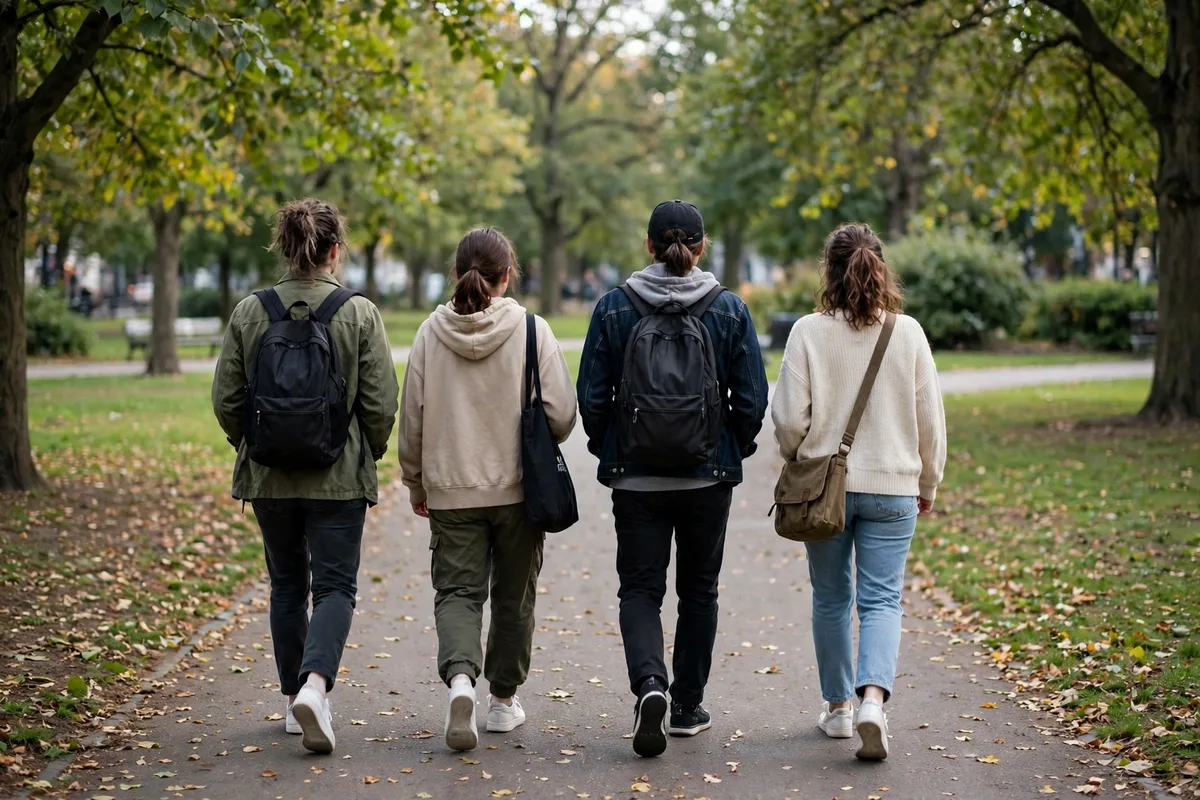
A day is full of people: family, colleagues, friends, strangers, and children. Day-in-the-life stories often include them casually, without asking, because they are simply part of the day. That casual inclusion can expose their routines, workplaces, and relationships, and embarrass someone who did not expect to be public content. Ask the regular people in your life for a standing agreement. Some families agree that only adults who consent appear, and children never do. One household allowed a daily opt-out with a single word.
4. Vary your routine on camera, even if your real routine is fixed
If your real routine is fixed, your on-camera routine should not be. Posting the same commute, the same café, and the same evening walk every day teaches a viewer your pattern, even if each post seems harmless. Vary what you show: sometimes the commute, sometimes a book, sometimes no morning post at all. Skip days, change angles, and feature different moments, so no pattern emerges. One commuter alternated between a food day, a work day, and a nature day, so a viewer could not predict where she would be.
5. Keep evenings and nights out of the full-day sequence

Evening and night frames are the most personal part of a day story: your home at night, your bedroom routine, your family winding down, or your late-night location. Including them completes the picture of when you are home, when you are asleep, and what your home looks like after dark. They also carry the highest risk of tired oversharing, because they are filmed when judgement is lowest. End your day story earlier than your real day ends. A day story closing with an afternoon walk or early dinner still feels complete, and leaves your evenings private. One creator ended all day stories at five in the afternoon.
6. Review the whole day story before it goes out
Because a day story is a sequence, it must be reviewed as a sequence, not frame by frame. Watch all the clips together and ask what they reveal in combination: a morning street plus an evening shop plus a workplace lunch can triangulate a neighbourhood, even when each frame alone seems safe. Check for repeated backgrounds and details that only make sense together. One poster realised three frames, a bus stop, a café, and a park bench, all pointed to the same small area. She replaced two frames with close-ups, and the story still worked.
Posting checklist
- Break the sequence: post out of order, skip hours, and delay the story until the next day.
- Leave anchor locations out, showing activities in close-up instead of buildings and signs.
- Agree standing consent rules with family and colleagues, and never include children without care.
- Vary what you show each day so no fixed routine emerges from your stories.
- End day stories in the afternoon, and keep evenings and nights private.
- Review the whole sequence together, checking what frames reveal in combination.
Frequently asked questions
Is a day-in-the-life story inherently unsafe?
Not inherently, but it is the format most likely to reveal a pattern, because it combines many moments into one sequence. Breaking the order, delaying the post, and removing anchor locations remove most of the pattern risk.
Should I stop showing my commute or workplace?
You do not need to stop showing work or travel, but show them as activities rather than places. A desk, a notebook, or a lunchbox tells the workday story without revealing an office, a route, or a timetable.
How do I handle family members who appear every day?
Agree a standing rule, and revisit it regularly. Some families allow adults who consent, never children, and no school or home exteriors. A simple daily opt-out, with no explanation needed, respects everyone's mood and privacy on a given day.
What is the biggest day-in-the-life privacy mistake?
Posting in real time, in order, all day long. Live, chronological stories function as a tracker, telling viewers where you are now and where you will be next. Delaying and shuffling the story removes that function while keeping the content just as engaging.
Closing
A day in your life is worth sharing, but it is also worth protecting. Break the sequence, leave the anchors out, agree consent, vary what you show, end before nightfall, and review the whole sequence as a stranger would. Your day stories will still feel personal, because they will show what your days feel like, not where every hour happens.
Related posts
- Story Privacy And Safety for before and after – ideas and examples you can post today
- Story Privacy And Safety for mornings – ideas and examples you can post today